Choosing a dentist for your child sounds simple until you start looking. You'll see "family dentists," "general dentists," and "pediatric dentists," and it isn't always clear what separates them or whether the difference matters for your child.
The short answer: both pediatric dentists and general dentists can care for children, and many do it very well. The difference is in training and focus. Understanding that difference can help you decide what fits your child best, especially if your child is very young, nervous, or has special health care needs.
What is the difference between a pediatric dentist and a general dentist?
Every dentist completes dental school and earns a DDS or DMD degree. A general dentist then cares for patients of all ages, from children to older adults, and provides a broad range of care such as cleanings, exams, fillings, and crowns.
A pediatric dentist completes the same dental school education, then an additional two to three years of full-time specialty training (a residency) focused entirely on infants, children, teenagers, and people with special health care needs. Pediatric dentistry is a recognized dental specialty.
In other words, a general dentist is trained to care for everyone. A pediatric dentist has chosen to care for children only, and has trained specifically for it.
What pediatric dentists learn during specialty training
Pediatric dental residency builds on dental school with in-depth training in:
- Child growth and development, including how the teeth and jaws develop from infancy through the teen years
- Behavior guidance, meaning age-appropriate ways to communicate with children, ease fear, and help them cooperate comfortably
- Caring for children with special health care needs, including medical, developmental, physical, and sensory conditions
- Treating baby teeth and young permanent teeth, which differ from adult teeth in size, shape, and how quickly decay can spread
- Managing dental injuries in growing children
- Working alongside physicians in hospital settings, so pediatric dentists understand how a child's overall health affects their dental care
When a pediatric dentist can be especially helpful
Infants and toddlers
The American Academy of Pediatric Dentistry (AAPD), the American Dental Association (ADA), and the American Academy of Pediatrics recommend a first dental visit by a child's first birthday. Those early visits focus on prevention: checking development, assessing cavity risk, and coaching parents on brushing, fluoride, feeding, and habits like pacifiers. Pediatric dentists see babies and toddlers every day and are comfortable examining patients who can't yet sit still in a dental chair.
Anxious or nervous children
Some children are cautious with new people and places; others have had a hard experience before. Pediatric dentists are trained in behavior guidance techniques designed for children's developmental stages. For some children, nitrous oxide (laughing gas) may also help with relaxation.
Children with special health care needs
Children with autism, sensory sensitivities, developmental delays, or medical conditions often benefit from a dentist who has specific training in adapting the visit, the environment, and the treatment plan to the individual child.
Children with frequent cavities or more complex needs
When a young child has several cavities, deep decay, or a dental injury, a pediatric dentist's experience with baby-tooth treatment, such as stainless steel crowns and space maintainers, can be especially valuable.
When a general dentist may also be a good choice
Many general dentists provide excellent care for children, particularly for cooperative kids with routine needs like cleanings, checkups, and small fillings. Some families value having everyone seen by the same dentist, and many older teenagers move to a general dentist as they approach adulthood.
If your general dentist refers your child to a pediatric dentist, that's a sign of good judgment, not a problem. Referral is how dentists make sure each patient gets the right level of care.
What to consider when choosing a dentist for your child
Whichever type of dentist you choose, these questions can help you find the right fit:
- Experience with children: How often does this dentist treat children your child's age?
- Early visits: Will they see your child by the first birthday?
- Parent involvement: Can you stay with your child during the visit?
- Communication: Do they explain things to your child in words a child understands, and to you in plain language?
- Prevention: Do they focus on keeping teeth healthy, not just repairing them?
- Comfort options: What do they offer for a nervous child?
- Emergencies: How do they handle a knocked-out tooth or a toothache?
- Practical details: Location, appointment availability, and insurance or payment options
- How your child feels: After the first visit, does your child feel safe going back?
Pediatric and family dentistry under one roof at Atlas Dental
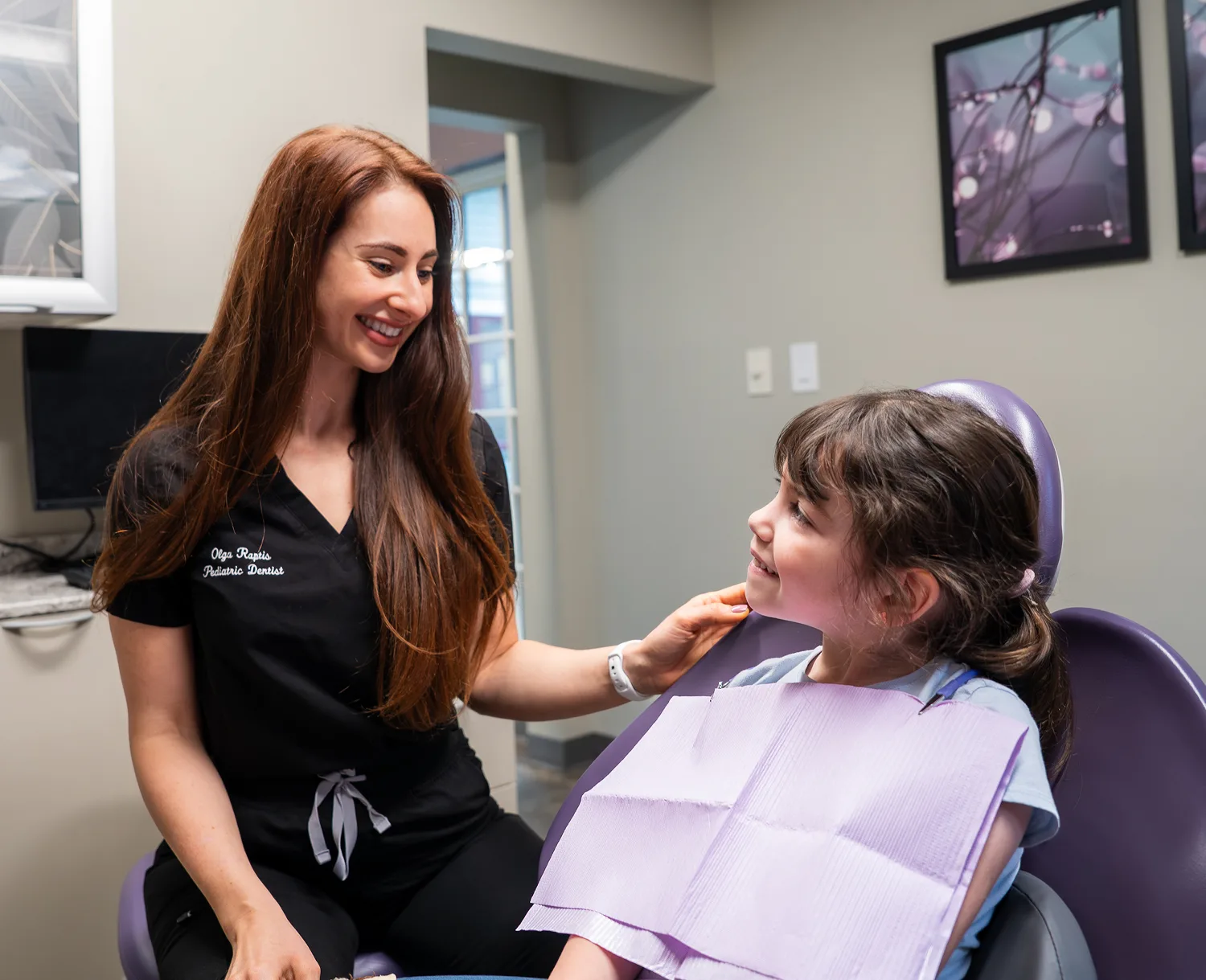
At Atlas Dental in New Boston, NH, children are cared for by Dr. Olga Raptis, our pediatric dentist. Dr. Raptis earned her Doctor of Dental Medicine degree from Tufts University School of Dental Medicine and completed specialty training in pediatric dentistry through NYU Langone Dental Medicine. She has practiced pediatric dentistry since 2019 and is an active member of the American Academy of Pediatric Dentistry.
Dr. Raptis sees children from their first dental visit as infants through the teenage years, while parents can see our general dentists in the same office. Parents are always welcome to stay with their child during cleanings, exams, and treatment, and laughing gas is available in every treatment room for children who need help relaxing.
For families in New Boston, Weare, Goffstown, Mont Vernon, Francestown, and nearby communities, that means specialized care for your child without a separate office for the rest of the family.
Frequently asked questions
At what age should my child first see a dentist?
By the first birthday, or within six months of the first tooth coming in. The AAPD, ADA, and American Academy of Pediatrics all recommend this "dental home" by age one, so prevention can start before problems do. Learn what to expect at your child's first dental visit.
Until what age can my child see a pediatric dentist?
Pediatric dentists care for children through adolescence. When your child moves to a general dentist depends on their needs and your family's preference. At Atlas Dental, that transition can happen within the same practice.
Does a pediatric dentist cost more than a general dentist?
Fees and insurance coverage vary by plan and procedure. Our team can help you understand your benefits before your child's visit. You can also review our insurance information.
If my child already sees a general dentist, should we switch?
Not necessarily. If your child is comfortable, cooperative, and has routine needs, there may be no reason to change. A pediatric dentist is worth considering if your child is very young, anxious, has special health care needs, or needs more involved treatment.
Schedule your child's visit
If you're deciding where your child should go to the dentist, we're happy to answer your questions. Learn more about our pediatric dentistry services, call us at (603) 487-2106, or book an appointment online with Dr. Raptis.