"It's just a baby tooth. Won't it fall out anyway?" It's one of the most common questions parents ask, and it's a fair one. The honest answer is that it depends. Some cavities in baby teeth need prompt treatment, some can be managed without drilling, and a few can simply be watched until the tooth falls out.
Here's how dentists think through that decision, and why baby teeth deserve more attention than their temporary status suggests.
Why baby teeth matter
Baby teeth (also called primary teeth) do far more than fill a smile for a few years:
- Chewing and nutrition. Healthy teeth let children eat a full range of foods comfortably.
- Speech. Front teeth help children form sounds as they learn to talk.
- Saving space for permanent teeth. Each baby tooth holds a place for the adult tooth developing underneath. The back baby molars typically stay until about ages 10 to 12, so a problem at age 4 or 5 can affect a child for many years.
- Protecting the teeth to come. An infection in a baby tooth can affect the permanent tooth forming just beneath it.
- Comfort and confidence. Children with dental pain may have trouble eating, sleeping, and concentrating at school.
What happens if a cavity in a baby tooth isn't treated?
Baby teeth have thinner enamel than permanent teeth, so decay can move through them faster. Untreated, a cavity typically progresses in stages:
- Early decay appears as chalky white spots where minerals are being lost from the enamel. At this stage it can often be reversed.
- A cavity forms as decay breaks through the enamel into the softer layer beneath. It won't heal on its own once this happens.
- Decay reaches the nerve inside the tooth, which can cause pain, especially at night or with sweets and cold.
- Infection can develop at the root, sometimes forming an abscess with gum or facial swelling.
An untreated infection can also damage the developing permanent tooth, and losing a baby tooth early to decay can let neighboring teeth drift into its space, crowding the permanent tooth when it arrives.
Why not every cavity gets the same treatment
There is no single "right" treatment for every cavity in a baby tooth. A pediatric dentist weighs several factors:
- How large and deep the cavity is, and whether it has reached the nerve
- Which tooth it is, and how soon it's expected to fall out naturally
- Your child's age, comfort, and ability to sit for treatment
- Your child's overall cavity risk, including diet, brushing habits, and past decay
- Your family's preferences after hearing the options
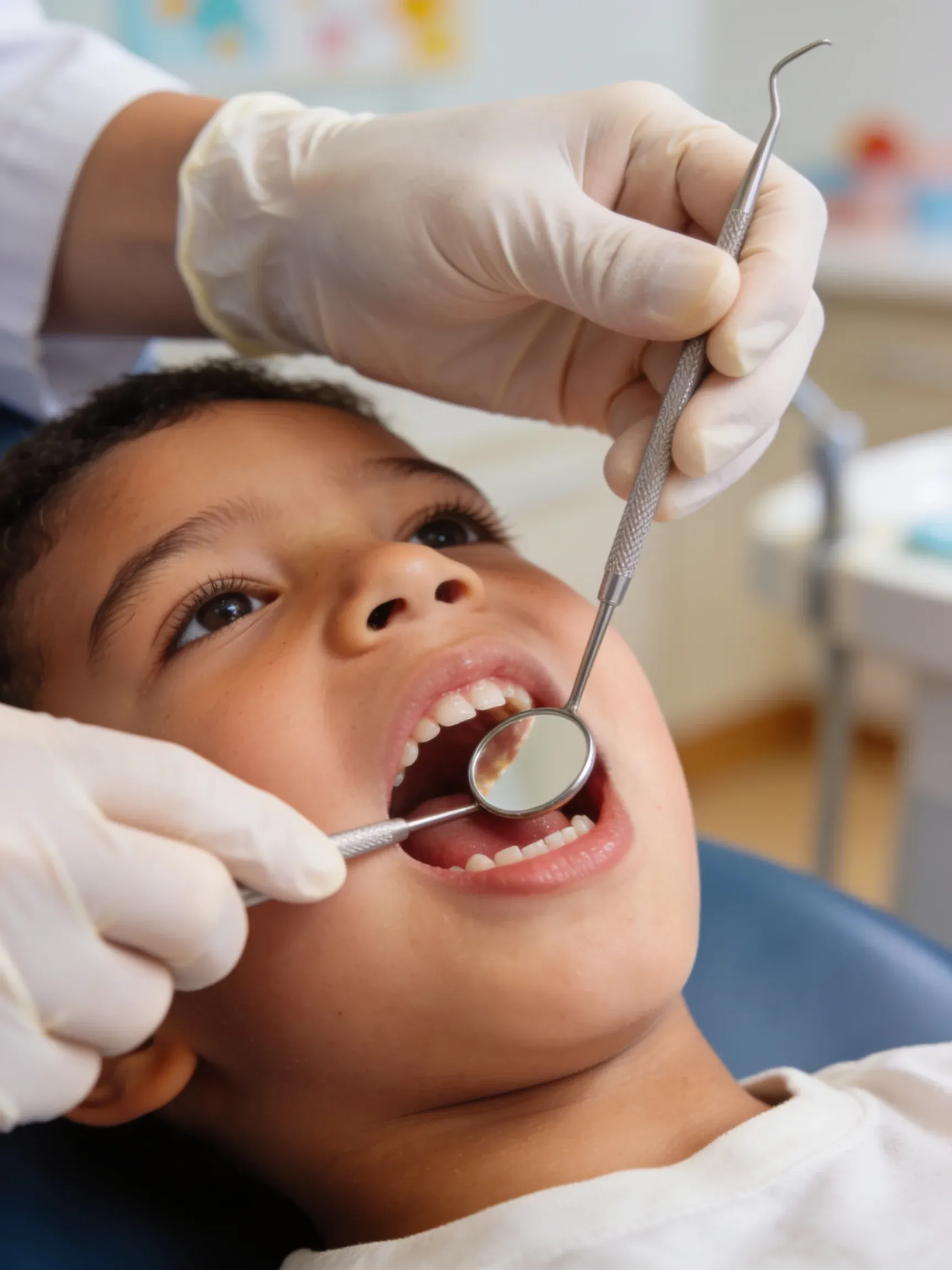
An X-ray often helps, because it shows how deep the decay goes and how far along the permanent tooth is underneath.
Monitoring or stopping early decay without drilling
Very early decay, before a true hole forms, can often be reversed with fluoride varnish, brushing with fluoride toothpaste, and changes to snacking habits. Some cavities can be stopped ("arrested") with a medicine called silver diamine fluoride, which is painted on without drilling; its main drawback is that it permanently darkens the decayed area. If a tooth is very close to falling out and isn't causing problems, your dentist may recommend simply keeping an eye on it.
Fillings
For small to moderate cavities, the decayed area is removed and the tooth is repaired with a filling. At Atlas Dental, Dr. Raptis uses tooth-colored fillings that blend in with the natural tooth.
Stainless steel crowns
When a baby molar has a large cavity, decay on several surfaces, or has needed treatment of the nerve, a filling may not hold up. A stainless steel crown covers the whole tooth and has a long track record as one of the most durable ways to restore a badly decayed baby molar. It comes out naturally with the baby tooth when the permanent tooth is ready.
Treating the nerve of a baby tooth
If decay has reached the nerve but the tooth can still be saved, the dentist may treat the infected or inflamed part of the nerve (a pulpotomy, sometimes called a "baby root canal"), usually followed by a crown.
Removing the tooth
When a tooth is too damaged to restore, has a significant infection, or is nearly ready to come out anyway, removing it may be the best option. If a back baby tooth is removed early, a space maintainer may be recommended to hold room for the permanent tooth.
Early diagnosis and prevention make the biggest difference
The smaller the cavity, the simpler the treatment, and the best outcome is a cavity that never forms. The AAPD and ADA recommend:
- Regular checkups, typically every six months or as your dentist recommends based on your child's cavity risk
- Brushing twice a day with fluoride toothpaste: a smear the size of a grain of rice for children under 3, and a pea-sized amount for ages 3 to 6
- Flossing wherever teeth touch
- Fluoride varnish applied at dental visits
- Sealants on the chewing surfaces of back teeth
- Limiting how often your child has sugary snacks and drinks, including juice. How often matters more than how much.
- No bottle or sippy cup of milk or juice in bed; water only after brushing at night
Learn more about our approach to prevention.
Signs your child may have a cavity
Early cavities often cause no symptoms at all, which is why regular checkups matter. Contact your dentist if you notice:
- Chalky white spots or lines on the teeth, especially near the gumline
- Brown or black spots, or a visible hole
- Sensitivity to sweets, cold, or hot foods
- Complaints of tooth pain, chewing on one side, or avoiding certain foods
- Food that repeatedly gets stuck in the same spot
- A pimple-like bump on the gum near a tooth
- Swelling of the gum or face
Facial swelling that is spreading, or that comes with fever or trouble swallowing or breathing, needs prompt medical attention. Call your dentist right away, and go to the emergency room if your child seems unwell.
How Dr. Raptis approaches cavities at Atlas Dental
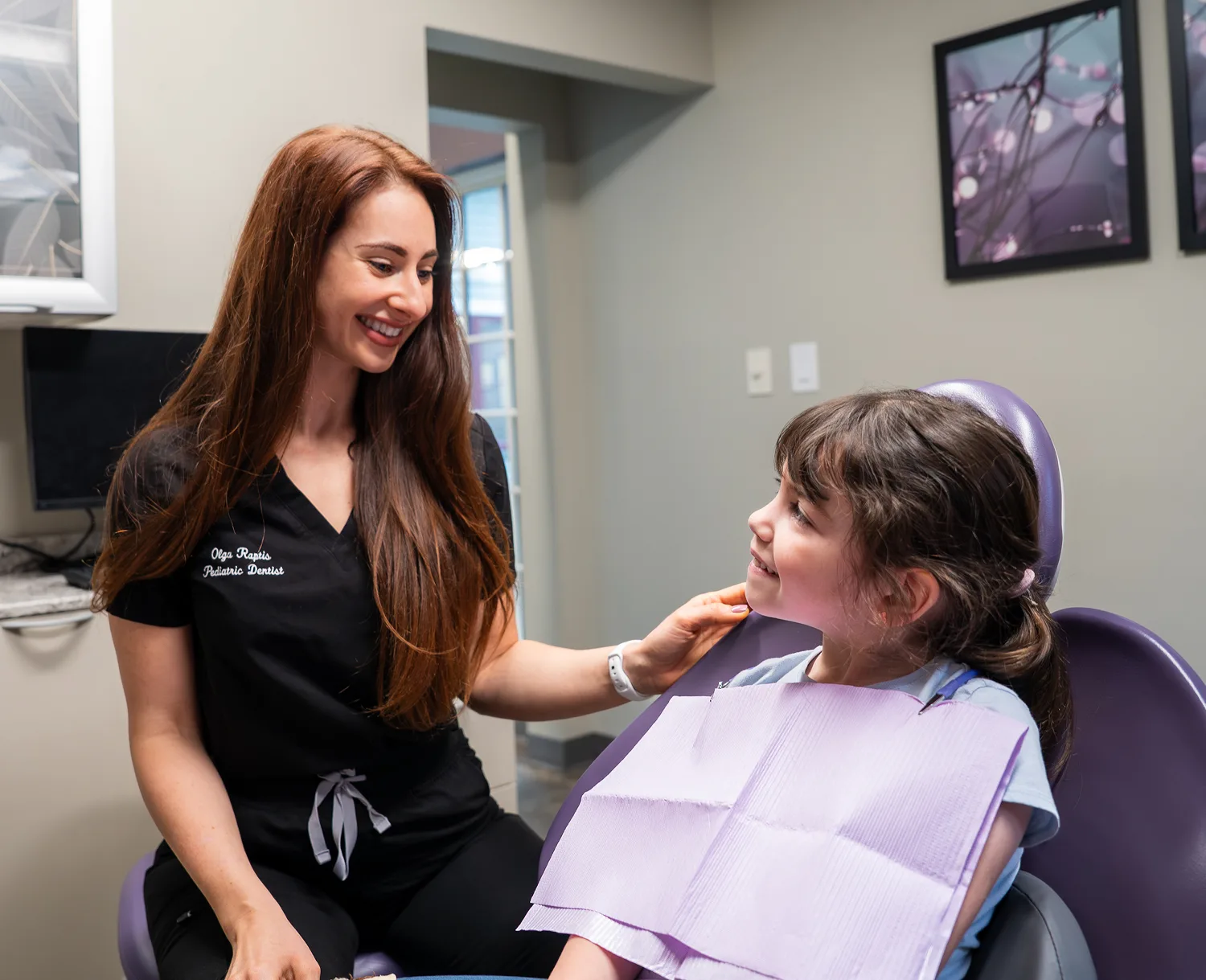
When Dr. Raptis finds a cavity, she'll explain what she sees, why it matters, and the options that make sense for your child, including when watching a tooth is reasonable. Numbing and laughing gas are available to help children stay comfortable, and parents are welcome to stay with their child during treatment.
Wondering whether your child should see a pediatric dentist at all? Read our guide to choosing a pediatric dentist or a general dentist.
Frequently asked questions
Can a cavity in a baby tooth go away on its own?
Very early decay (white spots) can often be reversed with fluoride and better habits. Once a cavity has formed a hole, it won't heal on its own, though it can sometimes be stopped from growing.
My child's tooth will fall out soon. Does the cavity still need treatment?
Sometimes not. If the tooth is close to falling out and the cavity is small and not causing pain, monitoring may be enough. An X-ray helps your dentist judge how much time that tooth has left.
Are stainless steel crowns safe?
Yes. They have been used for decades and are supported by the AAPD for restoring badly decayed baby molars. They do contain nickel, so let your dentist know if your child has a known nickel allergy.
Will my child need a shot for a filling?
Most fillings are done with local anesthetic so the tooth is numb. Dentists who treat children use techniques to make this as comfortable as possible, and laughing gas can help nervous children relax.
Why does my child get cavities even though we brush?
Brushing is essential, but cavity risk also depends on how often your child snacks or sips sugary drinks, the bacteria in their mouth, their enamel, and their saliva. Your dentist can assess your child's risk and tailor a prevention plan.
Talk with our pediatric team
If your child has been told they have a cavity, or you've noticed something that worries you, we're glad to take a look and walk you through the options. Call Atlas Dental in New Boston at (603) 487-2106 or book a visit with Dr. Raptis. You can also learn more about our pediatric dentistry services.