Quick answer
- Knocked-out adult (permanent) tooth: Find the tooth and hold it by the crown, not the root. Put it back in the socket if you can, or place it in cold milk. Call a dentist immediately; minutes matter.
- Knocked-out baby tooth: Do not put it back in. Control bleeding with gauze and call your dentist.
- Signs of a head injury, trouble breathing, or bleeding that won't stop: Go to the emergency room or call 911.
- Atlas Dental: (603) 487-2106
Falls on the playground, collisions on the field, and tumbles while learning to walk are a normal part of childhood, and so are dental injuries. When it happens to your child, it's frightening. Knowing a few key steps ahead of time can make a real difference, especially when a permanent tooth is involved.
First, check for more serious injuries
Before focusing on the tooth, make sure your child doesn't need emergency medical care. Call 911 or go to the nearest emergency room if your child:
- Lost consciousness, even briefly
- Has a headache, vomiting, confusion, unusual drowsiness, or vision changes after the injury
- Has bleeding that doesn't slow after 10 to 15 minutes of firm pressure
- Has trouble breathing or swallowing
- Can't close their mouth normally, or has significant jaw pain (a possible jaw fracture)
- Has a deep cut on the lip, tongue, or face that may need stitches
- Is missing a tooth that can't be found and is coughing or wheezing, since a tooth or fragment may have been inhaled
Emergency rooms often can't treat the tooth itself, so call your dentist as well once your child is safe.
Immediate steps after any dental injury
- Stay calm. Your child will take cues from you.
- Rinse the mouth gently with water and press clean gauze or a cloth on any bleeding area.
- Apply a cold compress to the outside of the face to reduce swelling.
- Look for missing teeth or pieces and keep them (see below for how).
- Figure out whether it's a baby tooth or a permanent tooth. As a rough guide, permanent front teeth usually come in between ages 6 and 8. If you're not sure, don't put the tooth back in; keep it in milk and call right away.
- Call your dentist. For pain, you can give children's acetaminophen or ibuprofen as directed on the label for your child's age and weight, or as your pediatrician advises.
Why baby teeth and permanent teeth are treated differently
The root of a baby tooth sits right next to the permanent tooth developing underneath it. With baby teeth, the priority is protecting that future tooth. With permanent teeth, the goal is to save the tooth itself, and speed often decides whether that's possible.
If a baby tooth is knocked out
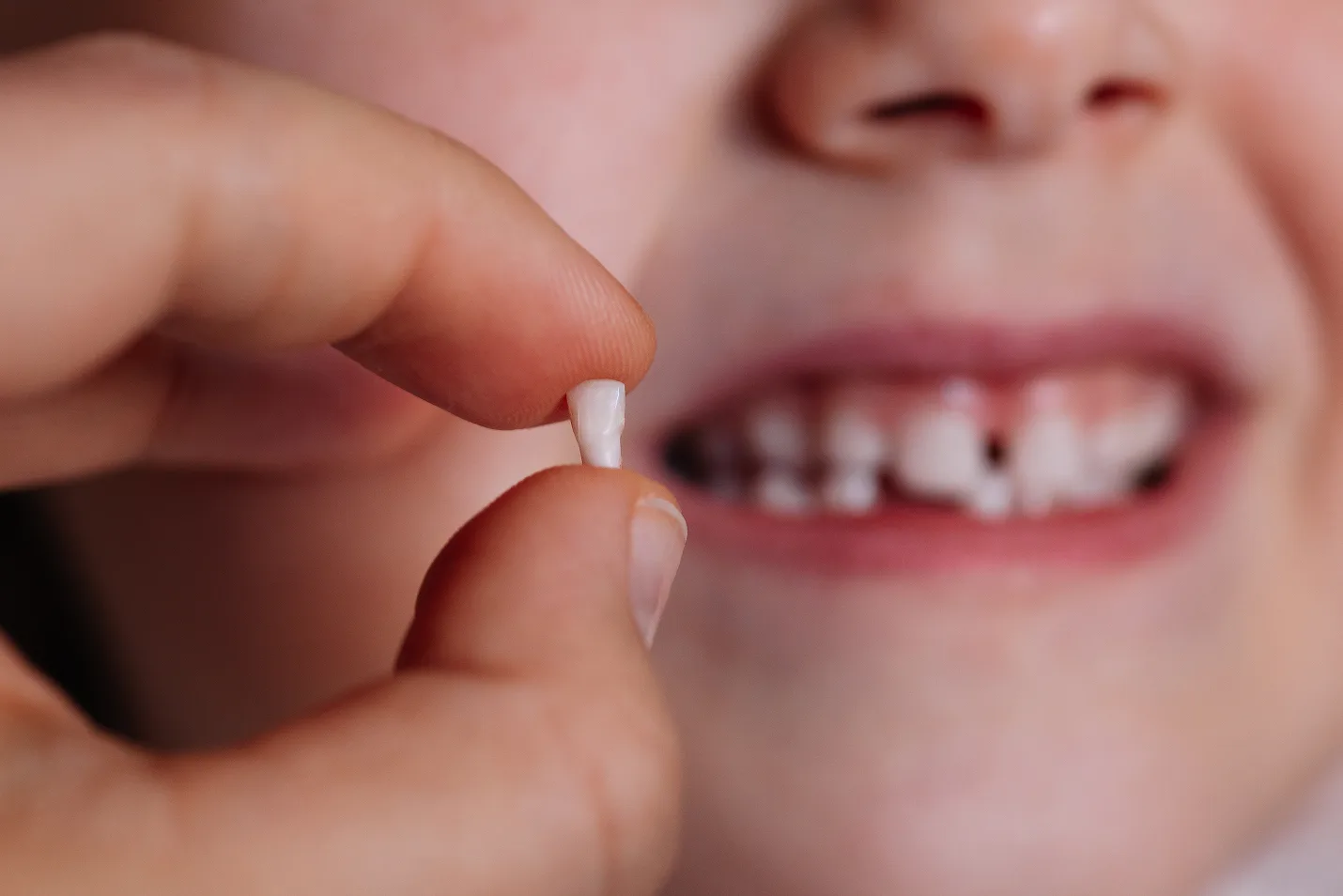
Never try to put a knocked-out baby tooth back in. Replanting a baby tooth can damage the permanent tooth developing beneath it, and current international guidelines advise against it.
Instead:
- Press gauze on the area to control bleeding.
- Bring the tooth with you if you find it. This helps the dentist confirm the whole tooth came out. Sometimes a tooth that looks knocked out has actually been pushed up into the gum.
- Call your dentist to have your child evaluated, so the gums and developing permanent tooth can be checked.
For front baby teeth, a space maintainer usually isn't needed, but your dentist will advise you. Learn more about baby tooth injuries.
If a permanent tooth is knocked out: act fast
A knocked-out permanent tooth is a true dental emergency. The cells on the root surface begin to die once the tooth dries out, so the best chance of saving it is to put it back in right away, ideally within 15 minutes.
- Find the tooth and pick it up by the crown (the white part you normally see). Don't touch the root.
- If it's dirty, rinse it briefly under cold running water, for no more than about 10 seconds. Don't scrub it, use soap, or wrap it in tissue.
- Put it back in the socket if you can. Gently push it into place facing the right way, then have your child bite on a clean cloth or gauze to hold it.
- If you can't put it back, keep it moist. Place it in a small container of cold milk. If milk isn't available, use saline or your child's saliva (have them spit into a cup). Don't store it in water, and don't let it dry out. Young children shouldn't hold the tooth in their mouth, since they could swallow it.
- Get to a dentist immediately, bringing the tooth with you.
- Ask your pediatrician about a tetanus booster if the tooth or wound came into contact with soil.
If the tooth can be saved, the dentist will reposition it and hold it in place with a flexible splint for about two weeks. Follow-up visits over the next several years are important to make sure the tooth heals well. Learn more on our knocked-out permanent tooth page.
If a tooth is chipped or broken
- Find the broken piece and keep it in a small container of water or milk so it doesn't dry out. A dentist can sometimes bond it back onto the tooth.
- Rinse the mouth with water and use a cold compress for swelling.
- Look at the broken surface. A pink or red spot in the center, or bleeding from the tooth itself, may mean the nerve is exposed. Call your dentist the same day.
- Check the lips. If the lip is cut and a piece of tooth is missing, tell your dentist, because a fragment can become lodged in the lip.
- Avoid very hot or cold foods if the tooth is sensitive.
Even a small chip with no pain should be checked within a day or two. Injured teeth can have damage that isn't visible, such as a cracked root or a tooth that has shifted slightly.
Teeth that are loose, pushed in, or out of position
If a tooth is loose, pushed up into the gum, or knocked out of line, don't try to move it back yourself. Call your dentist right away. For permanent teeth, prompt repositioning can make a significant difference.
Watch for these signs in the days and weeks after
Some problems appear only later. Contact your dentist if you notice:
- The tooth turning gray, yellow, or dark
- Swelling, or a pimple-like bump on the gum near the injured tooth
- Pain that returns or gets worse
- A tooth becoming looser
- Fever
A baby tooth that darkens after an injury sometimes lightens again on its own, but it should be checked and monitored.
When to contact your child's dentist
- Immediately: a knocked-out permanent tooth, or a permanent tooth pushed out of position
- The same day: a knocked-out baby tooth, a broken tooth with a pink or red spot, a loose or displaced baby tooth, or significant pain
- Within a day or two: a small chip with no pain
At Atlas Dental, call (603) 487-2106. Our team provides same-day evaluation for dental injuries during office hours.
Help prevent dental injuries
A properly fitted mouthguard is one of the simplest ways to protect your child's teeth during sports. Dr. Raptis fits custom mouth guards for children. At home, safety gates, supervised play on trampolines and climbing equipment, and properly installed car seats help prevent falls and facial injuries.
Frequently asked questions
Should I put a knocked-out baby tooth back in?
No. Replanting a baby tooth can harm the permanent tooth developing underneath. Keep the tooth, control the bleeding, and call your dentist.
What's the best thing to store a knocked-out tooth in?
Cold milk is the most practical option at home. Saline or your child's saliva (spit into a cup) are alternatives. Avoid water, and never let the tooth dry out.
My child chipped a tooth but isn't in pain. Do we still need to come in?
Yes, within a day or two. Injured teeth can have hidden damage, and a broken piece can often be reattached if it's brought in soon.
My child's baby tooth turned gray after a fall. What does that mean?
A gray or dark color usually means the tooth's nerve was bruised. Sometimes it recovers and lightens; sometimes the nerve doesn't recover. Your dentist will check for signs of infection and monitor the tooth over time.
Should we go to the dentist or the emergency room?
Go to the ER first for any sign of a head injury, breathing trouble, uncontrolled bleeding, or a possible jaw fracture. For injuries limited to the teeth and gums, call your dentist.
We're here when accidents happen
Dental injuries are stressful, but quick, calm action helps. If your child has injured a tooth, call Atlas Dental at (603) 487-2106 and our team will help you decide what to do next. Learn more about our emergency dentistry and pediatric dentistry services.