When a tooth is damaged by decay, a crack, or an old filling that's breaking down, there's more than one way to repair it. A filling, an inlay, an onlay, and a crown each cover a different amount of the tooth, and the right choice depends on how much healthy tooth is left.
A good guiding principle is to remove only as much tooth as needed to make the repair last. Tooth conservation is central to modern dentistry, partly because bonding to enamel, the hard outer layer of the tooth, is stronger than bonding to the layers beneath it. Here's how dentists decide which option fits.
The four options at a glance
- Filling: Fills a cavity inside the tooth. Typically used for small to moderate decay.
- Inlay: Fits inside the tooth, between the cusps. Typically used for larger cavities where a filling may not hold up.
- Onlay: Covers one or more cusps (the raised points of a back tooth). Typically used for weakened or cracked cusps, with healthy tooth elsewhere.
- Crown: Covers the entire visible tooth. Typically used for extensive damage, many root-canal-treated back teeth, or major cracks.
Fillings: for small to moderate damage
A filling repairs a cavity by removing the decay and filling the space, usually with tooth-colored material. It's quick, conservative, and often finished in one short visit.
The limit is size. A very large filling leaves thin walls of natural tooth around it, and those walls can flex and crack under chewing forces over time. When a cavity or old filling takes up much of the tooth, a stronger option may last longer.
Inlays: a stronger repair inside the tooth
An inlay is a custom-made restoration that fits inside the tooth, like a filling, but is crafted as a single solid piece. Inlays are often used when a cavity is too large for a filling to hold up well but the outer walls of the tooth are still strong.
Onlays: protecting weak cusps while saving healthy tooth
An onlay covers one or more of the cusps, the raised points on the chewing surface of a back tooth. It's sometimes called a partial crown. An onlay protects the weakest parts of the tooth while leaving the healthy parts alone, so it can be a more conservative choice than a full crown.
At Atlas Dental, many inlays and onlays are designed and milled in the office with CEREC and placed in a single visit.
Crowns: when the whole tooth needs protection
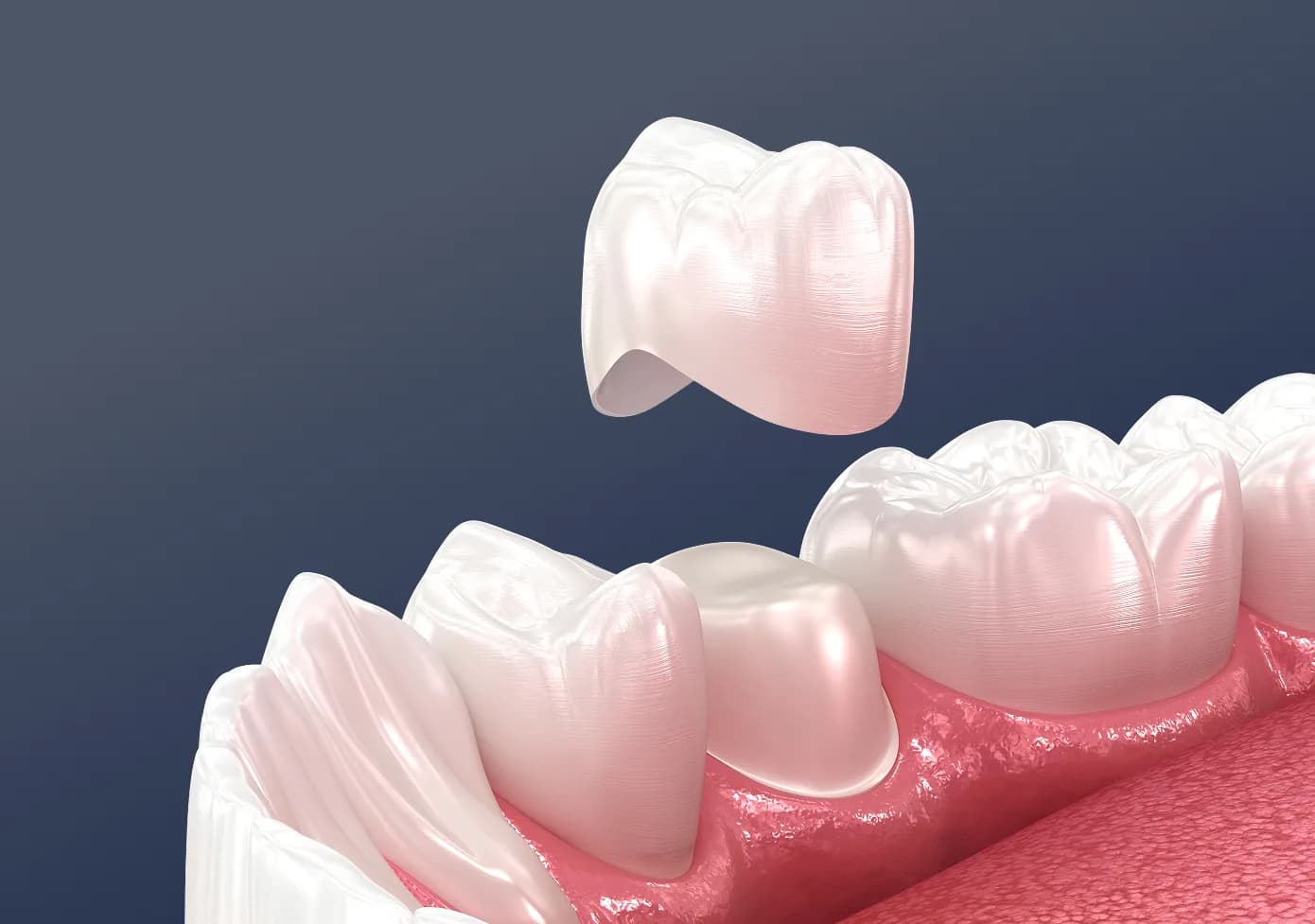
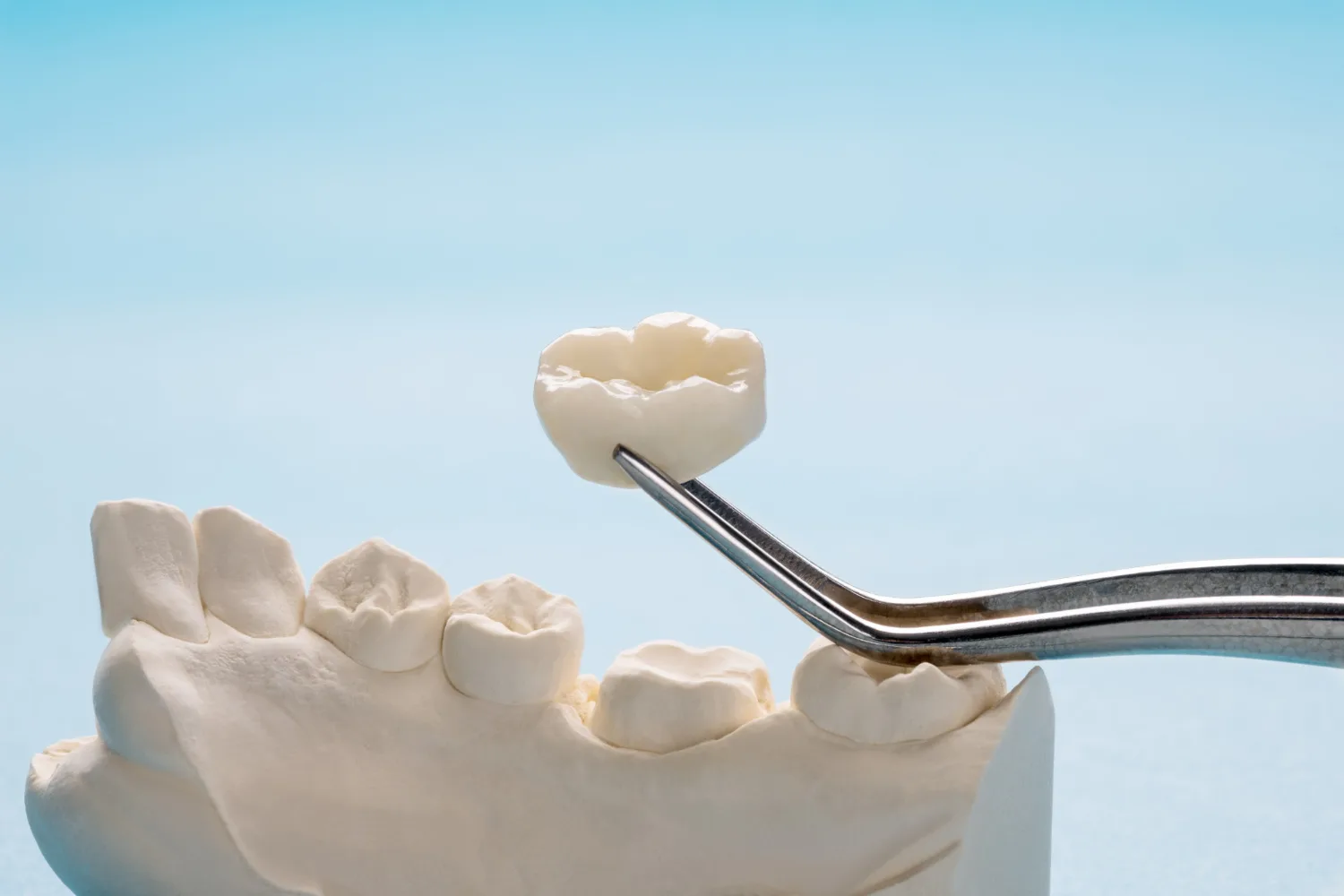
A crown covers the entire visible part of the tooth. Think of it as a helmet for your tooth: it takes the force of chewing so a weakened tooth doesn't crack. It's usually the right choice when:
- A large part of the tooth is missing or broken
- The tooth has a crack that extends across it
- A back tooth has had a root canal and much of its structure is gone
- A large old filling is failing and there's little natural tooth left to support another one
- The tooth needs a significant change in shape or color
At Atlas Dental, most crowns are same-day CEREC crowns, made and placed in one visit. Learn how same-day and traditional crowns compare.
Special situations
Cracked teeth
A cracked tooth may hurt when you bite down or when you release your bite, or feel sensitive to cold. Cracks often don't show up on X-rays, and they can grow over time. Depending on where the crack is and how deep it goes, a crown or onlay can hold the tooth together and protect it. A crack that reaches the nerve may also need a root canal, and some cracks extend too far for the tooth to be saved. Getting a cracked tooth checked early gives you the most options.
After a root canal
Back teeth that have had a root canal are usually recommended to get a crown or onlay that covers the cusps, because they've often lost a lot of structure and are more prone to breaking. Front teeth with plenty of healthy structure left may need only a filling. At Atlas Dental, a same-day crown can often be placed after root canal therapy when appropriate.
Old fillings
An old filling doesn't need to be replaced just because it's old. It's replaced when it's breaking down, leaking, has decay around it, or the tooth around it is cracking. Your dentist will look for those signs at your checkups.
How your dentist decides
The choice depends on what your dentist sees, not on a single rule. Factors include:
- How much healthy tooth structure is left
- Whether there are cracks, and where they are
- Whether the tooth has had a root canal
- Your bite, and whether you grind or clench
- X-rays and intraoral camera images of the tooth
- Your preferences, budget, and insurance
A good recommendation comes with an explanation. You should understand why one option was chosen over the others.
Signs a tooth should be checked
Schedule a visit if you notice:
- Pain when biting or releasing your bite
- Sensitivity to cold, heat, or sweets that lingers
- A visible crack, chip, or broken filling
- Food that keeps getting stuck in the same spot
- A dark spot or a rough edge you can feel with your tongue
How Atlas Dental approaches restorations
Dr. Daniel Mejia believes the best treatment begins with listening, and he focuses on conservative care that preserves as much of your natural tooth as possible. Even our same-day crowns are designed to be very conservative, keeping healthy enamel wherever we can. Intraoral cameras let you see what we see, so you can understand the recommendation before deciding. With CEREC in the office, inlays, onlays, and crowns can often be completed in a single visit. Fillings and other general dentistry are available for the whole family in New Boston, NH.
Frequently asked questions
Is an onlay as strong as a crown?
For the right tooth, an onlay can protect it well while keeping more of your natural tooth. A crown is stronger protection for a tooth that is extensively damaged or cracked across. Your dentist will recommend the option that fits the damage.
Can I get a big filling instead of a crown?
Sometimes, but a very large filling can leave the remaining tooth weak and more likely to crack. If there isn't enough healthy tooth left to support a filling, an onlay or crown usually lasts longer.
Does every tooth need a crown after a root canal?
Not every tooth. Back teeth usually do need a crown or onlay that covers the cusps. Front teeth with enough healthy structure may only need a filling.
Why would my dentist recommend a crown for a tooth that doesn't hurt?
Cracks and weakened cusps often cause no pain until the tooth breaks. Protecting a tooth before it breaks can prevent a larger problem, such as a fracture that needs a root canal or can't be repaired.
Are inlays and onlays covered by insurance?
Many dental plans include coverage for inlays, onlays, and crowns, but benefits vary. Our team can help you understand your coverage before treatment.
Not sure what your tooth needs?
If you have a cracked tooth, a large old filling, or a tooth that's been bothering you, we'll take a look, show you what we see, and explain your options. Call Atlas Dental in New Boston at (603) 487-2106 or book an appointment online.